mardi 4 décembre 2018

Could blockchain be the next big thing in gaming?

Virtually every sector is exploring an array of possible applications for blockchain technology. Since its inception ten years ago as the platform on which cryptocurrency was built, the blockchain has made waves in the financial, insurance, legal and logistics sector to name a few. 

Could blockchain be the next big thing in gaming?
Sumit Kumar Sharma, Enterprise Architect,
In2IT Technologies
.
More recently, blockchain technology has found a potentially exciting use in gaming.

A year ago, blockchain superpower Ethereum launched a game on their blockchain called CryptoKitties. The game allows users to create, sell and buy their own virtual animated kittens securely, while the nature of blockchain ensures that each user’s kitten creation is protected – only the seller and the buyers will be able to “own” that specific kitten.

However, blockchain technology has the power to revolutionise the gaming industry on the whole from a technological perspective.

Gaming in SA

Gaming has taken off in South Africa over the past decade, moving away from being considered a recreational pastime, to being considered a competitive sport, and the domain of anyone with the time and money to spare.

Sporting games, first person shooter games, virtual reality games, single or multiplayer, localised to the gamer’s premises or in play with remote players across networks, gaming has become a popular culture. However, in South Africa we are heavily reliant on game play that is determined for us.

Open gaming

To date, gaming development has been the realm of big, mostly international gaming brands. These gaming houses invest the time and money to develop content for users who have to select from their options at the prices determined for them.

Using blockchain technology, gaming houses could open up development to the gaming development community. For example, gamers could develop environments, characters or avatars, customised challenges and more using the game developer’s platform. They could obtain trade permissions from the game developer, then securely sell their creation on the blockchain. CryptoKitties is proven and successful validation of this concept.

This means that not only can gamers contribute to creating the game, thereby customising it to cater to cultural market demands, but can also profit from it. Whereas, big development houses can focus more on enablement of development ecosystem that can generate more localised gaming content using BlockChain.

The transparent and secure nature of the blockchain makes this possible, allowing game vendors to monitor, assist and be involved with gamer development while enabling gamers to retain the rights to their creations and additions to the game.

Social, cheat-free gaming

Creating a platform where gamers can get involved not just from player perspective, however, also from a development side helps to engender a more social gaming environment.

Game play on the blockchain also creates a more cheat free environment. Players’ right to enter a new stage or environment can be verified through their play history on a previous stage or they can be required to pay a fee to enter the new stage of play. Due to the authentication and transparency required by the blockchain, cheating would be recorded and noted, and players may be denied access to next levels.

Customised, piracy free gaming

While the blockchain enables the potential for players to customise and monetise their games, it also helps developers to create gaming aimed directly at their core markets. Data storage on the blockchain, at the back-end of gaming, can record player behaviour and give insights into what the players like, dislike and how they interact with the game. Developers can use this information to mould the game according to player data.

Similar to blockchain game platforms that can eliminate cheating, they can also eradicate piracy. Piracy continues to be a thorn in the sides of game houses and is a contributing factor to the high prices of games, today. If players are required to go to an authenticated platform in order to play, it would be impossible for gamers to make copies and pirate games without leaving a record of the action. Game houses could more easily identify and report piracy.

Gaming for the future

Gaming and new technologies are interweaving rapidly, with game developers leveraging the likes of Artificial Intelligence (AI) and Virtual Reality (VR) across the board. The inclusion of blockchain is the next logical step, where these technologies can integrate more seamlessly while incorporating players and developers, and encouraging an influx of non-gamers, too.

By Sumit Kumar Sharma, Enterprise Architect at In2IT - Source of article Itnewsafrica

Attack of the small screens: Africa eyes mobile gaming boom

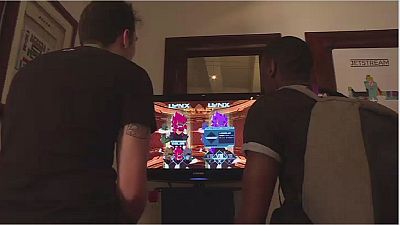
A man playing an as-yet unreleased brawler game, called Shattered Realms, at Africa Games Week, one of Africa's most significant electronic gaming expos, in Cape Town. — Photos: AFP
An army of humans laid waste to an alien colony as South African videogame maker Simon Spreckley enthusiastically controlled the action using his phone's touch screen. 

"The penetration of mobile devices in Africa is huge. People often have two or three phones, which is pretty crazy," said Spreckley, 40, who wore a T-shirt emblazoned with "Brute", a four-armed muscled alien from the game. 

"So that's one of the big pluses and why we are trying to do this," he said, promoting Invasion Day which will likely launch on Apple's App Store and Google's Play platform in 2019. 

The multi-player tactics game, set in the 1950s, is the brainchild of Spreckley's eight-strong team at VSUS, a Cape Town-based developer. 

"There's enormous potential in Africa because the continent is primarily mobile," said Sidick Bakayoko, 34, the founder of Paradise Game, an umbrella group for developers in Ivory Coast. 

"We've done a jump and instead of first going with PC, we've gone directly to mobile," he told AFP at last week's Africa Games Week convention in Cape Town which brought together African games coders, developers and artists with top executives from Sony and other industry giants. 

"With the emergence of a number of low-cost smartphones, it's now very easy to purchase a mobile phone," he said while videogames enthusiasts tried out the continent's latest digital offerings on screens nearby. 

'Jump on the bandwagon' 

Bakayoko said that the increasing number of African gaming products for handheld devices mirrored the explosion of mobile banking and financial tools like Kenya's Mpesa on the continent in recent years. 

Sidick Bakayoko, founder of Paradise Games, in the Ivory Coast, talks about his work at Africa Games Week, one of Africa's most significant electronic gaming expo's on November 28, 2018, in Cape Town. - This event brought game developers from various African countries, together with some representatives from the international gaming companies, and other people interested in the games industry. Many other African developers are also opting to tailor games for mobile devices instead of traditional consoles like PlayStation or desktop computers, leading to a surge of handheld innovation on the continent. (Photo by Rodger BOSCH / AFP)
Bakayoko believes there's tremendous potential in mobile gaming in Africa.
"So there's great potential for videogames using electronic payments... it can work well with Kenya as a prime example," he said. 

"There's no reason for Africa not to jump on the bandwagon." 

Another part of mobile gaming's appeal over other platforms in Africa is that it consumes less data, which can be slow or costly.

"In Nigeria they even get games pre-loaded on the phones because data is so expensive," said Evan Greenwood, 37, the director of South Africa's leading computer game studio Free Lives. 

"There's the potential (in Africa) – but data has to get cheaper and the right games have to be made." 

Evan Greenwood, director of Free Lives Games, one of South Africa's biggest games production companies, talks about their work, at Africa Games Week, one of Africa's most significant electronic gaming expo's on November 28, 2018, in Cape Town. - This event brought game developers from various African countries, together with some representatives from the international gaming companies, and other people interested in the games industry. Greenwood is also one of the creators of the interactive game, Genital Jousting. Many other African developers are also opting to tailor games for mobile devices instead of traditional consoles like PlayStation or desktop computers, leading to a surge of handheld innovation on the continent. (Photo by Rodger BOSCH / AFP)
Greenwood agrees there's potential (in Africa) but "data has to get cheaper
and the right games have to be made".

Invasion Day will be free to download, but players must purchase upgrades from within the game. 

Spreckley hopes Invasion Day will catch the eye of a major investor, but many African mobile games developers have struggled to turn their creations into cash. 

'In more people's hands' 

Ivory Coast's Point Point, based on a traditional children's game played using paper, and Madagascar's Gazkar, a racing game featuring the island's ubiquitous Citroen 2CV, have proved popular with mobile gamers – though not readily profitable. 

But Google's decision in June to allow games developers from African countries including Nigeria, Zimbabwe, South Africa and Tanzania to make money from their creations sold on its Play store could revolutionise the sector. 

"Most people use (Google) Android here," said Sithe Ncube, 24, the founder of Zambia's Ubongo Game Lab. 

"People haven't had a way to monetise their mobile games. People have actually been developing apps for a while but there hasn't been a way to use it as a business model," said Ncube who wore a spiked choker and had a streak of bright purple in her dark hair. 

"If Google Play can let us do that, then that's a good platform for people to start on." 

In 2017, accountants PwC said "revenues for console and PC games will lose market share to social (and) casual gaming" like that offered on handheld devices. 

Africa's videogame industry, currently worth US$310mil (RM1.28bil), would be worth US$642mil (RM2.66bil) by 2021, the firm added. 

Spreckley said that choosing the mobile support for his game would mean "we can get it in more people's hands quicker". 

"You're not reliant on people buying big expensive consoles and then products off the shelf." – AFP

Source of article Thestar

Les défis de l'industrie du jeux vidéo en Afrique

Les défis de l'industrie du jeux vidéo en Afrique

Comment faire face aux défis de l’industrie du jeu vidéo en Afrique. Une question sur laquelle se sont penchés les développeurs, distributeurs et autres professionnels du secteur lors de l’Africa Games Week au Cap en Afrique du Sud.

Objectif principal de cette rencontre, doper la jeune industrie vidéo du continent de nouveaux outils tout aussi attrayants.

“On cherche à faire grandir, à professionnaliser l’industrie. Quelles sont les structures de soutien qui manquent ? Comment les mettre en place ? Une fois qu’on aura créer les fondations, une fois qu’on aura de nombreux studios de développement sur le continent, des studios qui marchent commercialement’‘, explique d’entrée de jeu Nick Hall, organisateur de l‘événement et directeur de l’Africa Games Week.
"L'Afrique a énormément de potentiel parce que c'est un continent essentiellement de mobiles. On a fait ce bond technologique. Au lieu de passer par le PC, nous sommes allés directement au mobile''.
Le marché reste cependant inexploité, faute d’investisseurs. Par ailleurs, de nombreux développeurs africains optent pour la création de jeux destinés aux téléphones et tablettes, et non aux consoles traditionnelles comme la PlayStation ou les ordinateurs fixes.

Sithe Ncube est la fondatrice du studio zambien Ubongo Game Lab

“Le marché reste inexploité ici. Il y a des tonnes de perspectives sur ce continent qu’ils n’ont pas encore vues. Ça les aiderait autant que ça nous aiderait nous. Ce ne seraient pas eux qui viennent ici pour nous aider, ce serait plutôt une relation aux bénéfices mutuels.”

“Ce qu’on essaie de faire à Nyamakop c’est de créer plus de contenu d’inspiration africaine, mais que ce contenu soit attractif pour l’international, consommé à l’international, et comme ça à travers cette visibilité, ce succès, que tout cela bénéficie à l’Afrique. C’est un peu contre-intuitif, mais ce qu’on doit faire, tous, c’est créer plus de jeux. C’est pour ça qu’on est là… Il ne faut pas être idéaliste.” Ajoute à son tour Ben Myres, co-foundateur du studio sud-africain Nyamakop.

Le nombre croissant de jeux africains pour les appareils mobiles s’explique aussi par l’explosion des moyens bancaires sur portable, comme Mpesa au Kenya, un système de transfert d’argent via téléphone mobile.


Un énorme potentiel

“Au Nigeria, il y a même des jeux pré-téléchargés sur les téléphones parce que le data est très cher”, explique Evan Greenwood, directeur du principal studio de jeux vidéo en Afrique du Sud, Free Lives.

Pour certains développeurs, les jeux sur portable sont moins coûteux en données, alors que l’internet peut être cher et lent dans certaines régions du continent.

‘‘Maintenant il reste encore a trouver la solution au niveau de la monétisation de ces jeux-là sachant qu’en Afrique les personnes n’ont pas de carte bancaire, mais il existe des solutions, les paiements électroniques basés sur les télécom, enfin les portefeuilles électroniques des opérateurs télécom.” Conclut Sidick Bakayoko, fondateur du studio ivoirien Paradise Game.

La récente décision en juin de Google de monétiser, et non plus de proposer en téléchargements gratuits sur son” play store”, des jeux de différents pays africains dont le Nigeria, le Zimbabwe, l’Afrique du Sud et la Tanzanie pourrait cependant changer la donne.

Pour attirer les passionnés, des jeux comme “Invasion Day” – créé par une équipe de huit personnes travaillant pour VSUS, un développeur basé au Cap, devrait être lancé en 2019 sur cette plateforme et probablement l’App Store d’Apple – seront téléchargés gratuitement mais les joueurs pourront acheter des mises à jour.

L’industrie du jeu vidéo en Afrique, qui représente actuellement 310 millions de dollars par an, pourrait peser 642 millions de dollars d’ici à 2021, selon le géant de l’audit PwC qui estimait en 2017 que “les re venus des jeux de consoles et de PC allaient perdre des parts de marché au profit des jeux” proposés sur des appareils mobiles.

Source de l'article Africanews

lundi 3 décembre 2018

Attack of the small screens: Africa eyes mobile gaming boom

Africa mobile gaming
Part of mobile gaming’s appeal over other platforms in Africa is that it consumes
less data, which can be slow or costly. Image: IStock/mapodile
An army of humans laid waste to an alien colony as South African video game maker Simon Spreckley enthusiastically controlled the action using his phone’s touch screen.

“The penetration of mobile devices in Africa is huge. People often have two or three phones, which is pretty crazy,” said Spreckley, 40, who wore a T-shirt emblazoned with “Brute”, a four-armed muscled alien from the game.

“So that’s one of the big pluses and why we are trying to do this,” he said, promoting “Invasion Day” which will likely launch on Apple’s App Store and Google’s Play platform in 2019.

The multi-player tactics game, set in the 1950s, is the brainchild of Spreckley’s eight-strong team at VSUS, a Cape Town-based developer.

Many other African developers are also opting to tailor games for mobile devices instead of traditional consoles like PlayStation or desktop computers, leading to a surge of handheld innovation on the continent.

“There’s enormous potential in Africa because the continent is primarily mobile,” said Sidick Bakayoko, 34, the founder of Paradise Game, an umbrella group for developers in Ivory Coast.

“We’ve done a jump and instead of first going with PC, we’ve gone directly to mobile,” he told AFP at last week’s Africa Games Week convention in Cape Town which brought together African games coders, developers and artists with top executives from Sony and other industry giants.
“With the emergence of a number of low-cost smartphones, it’s now very easy to purchase a mobile phone,” he said while video games enthusiasts tried out the continent’s latest digital offerings on screens nearby.

‘Jump on the bandwagon’

Bakayoko said that the increasing number of African gaming products for handheld devices mirrored the explosion of mobile banking and financial tools like Kenya’s Mpesa on the continent in recent years.

“So there’s great potential for video games using electronic payments… it can work well with Kenya as a prime example,” he said.

“There’s no reason for Africa not to jump on the bandwagon.”

Another part of mobile gaming’s appeal over other platforms in Africa is that it consumes less data, which can be slow or costly.

“In Nigeria they even get games pre-loaded on the phones because data is so expensive,” said Evan Greenwood, 37, the director of South Africa’s leading computer game studio Free Lives.

“There’s the potential (in Africa) — but data has to get cheaper and the right games have to be made.”

Invasion Day will be free to download, but players must purchase upgrades from within the game.

Spreckley hopes Invasion Day will catch the eye of a major investor, but many African mobile games developers have struggled to turn their creations into cash.

‘In more people’s hands’

Ivory Coast’s Point Point, based on a traditional children’s game played using paper, and Madagascar’s Gazkar, a racing game featuring the island’s ubiquitous Citroen 2CV, have proved popular with mobile gamers — though not readily profitable.

But Google’s decision in June to allow games developers from African countries including Nigeria, Zimbabwe, South Africa and Tanzania to make money from their creations sold on its Play store could revolutionize the sector.

“Most people use (Google) Android here,” said Sithe Ncube, 24, the founder of Zambia’s Ubongo Game Lab.

“People haven’t had a way to monetize their mobile games. People have actually been developing apps for a while but there hasn’t been a way to use it as a business model,” said Ncube who wore a spiked choker and had a streak of bright purple in her dark hair.

“If Google Play can let us do that, then that’s a good platform for people to start on.”

In 2017, accountants PwC said “revenues for console and PC games will lose market share to social (and) casual gaming” like that offered on handheld devices.

Africa’s video game industry, currently worth $310 million, would be worth $642 million by 2021, the firm added.

Spreckley said that choosing the mobile support for his game would mean “we can get it in more people’s hands quicker.”

“You’re not reliant on people buying big expensive consoles and then products off the shelf.” CC

Source of article AFP & Technology Inquirer

dimanche 2 décembre 2018

Boom des jeux vidéo sur mobile en Afrique

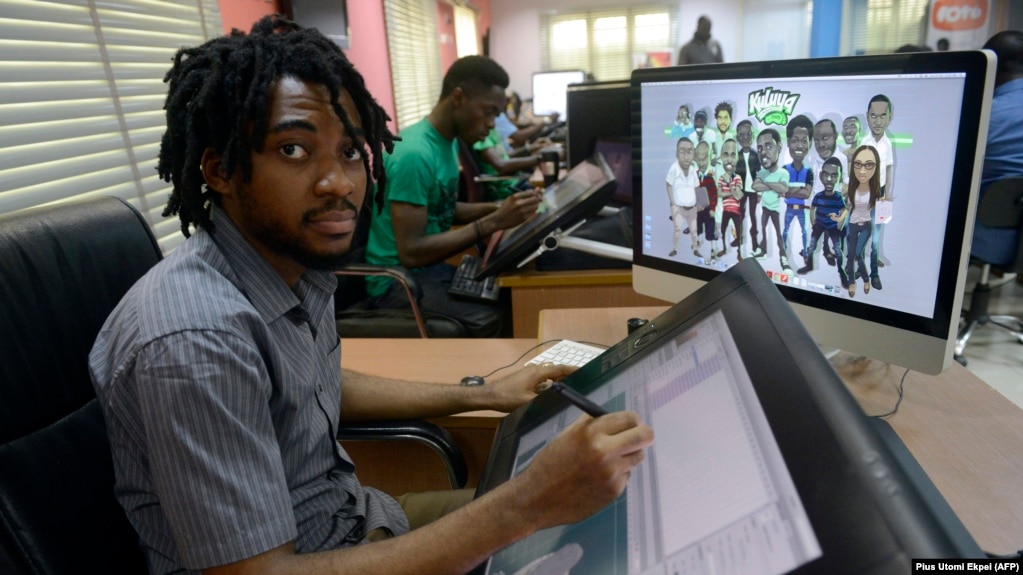
Ekene Nkenchor conçoit et dessine un jeu vidéo pour la société Kuluya à Lagos, le 25 février 2014.
L'action se passe dans les années 1950: une armée d'humains anéantit une colonie d'extraterrestres. Les mains sur son téléphone, les yeux rivés sur son petit écran, le fabricant de jeux vidéo sud-africain Simon Spreckley s'amuse beaucoup avec sa nouvelle création.

"Le taux de pénétration du téléphone portable en Afrique est très élevé. Les gens possèdent souvent deux, voire trois téléphones. C'est la folie", estime le tout juste quadragénaire, vêtu d'un tee-shirt représentant "Brute", du nom de l'extraterrestre à quatre bras tout droit sorti de son dernier jeu, "Invasion Day".

Comme Simon Spreckley, de nombreux développeurs africains optent pour la création de jeux destinés aux téléphones et tablettes, et non aux consoles traditionnelles comme la PlayStation ou les ordinateurs fixes.

"L'Afrique a énormément de potentiel parce que c'est un continent essentiellement de mobiles", explique Sidick Bakayoko, 34 ans, fondateur de Paradise Game, qui regroupe des développeurs ivoiriens.

"On a fait ce bond technologique. Au lieu de passer par le PC, nous sommes allés directement au mobile", dit-il à l'occasion de la convention Africa Games Week, qui a réuni au Cap du 28 novembre au 2 décembre codeurs de jeux, développeurs, artistes et géants de l'industrie.

"Aujourd'hui, il est très facile de se payer un téléphone mobile grâce à un certain nombre de smartphones à bas prix", assure Sidick Bakayoko, alors que des mordus de jeux vidéo testent à côté de lui de nouvelles créations.

Le nombre croissant de jeux africains pour les appareils mobiles s'explique aussi par l'explosion des moyens bancaires sur portable, comme Mpesa au Kenya, un système de transfert d'argent via téléphone mobile.

"En Afrique, beaucoup de gens n'ont pas de carte bancaire, mais il existe des solutions de paiement électronique grâce aux télécommunications", qui permettent d'acheter des jeux vidéo en ligne, poursuit Sidick Bakayoko.

"Il y a effectivement un potentiel au niveau des jeux mobiles et du paiement électronique. Ca marche très bien au Kenya par exemple (...) Il n'y a pas de raison pour que le reste de l'Afrique ne puisse pas prendre le train en marche."

- Gros potentiel -

Autre avantage des jeux sur portable, ils ne sont pas trop gourmands en data, alors que l'internet peut être cher et lent dans certaines régions du continent.

"Au Nigeria, il y a même des jeux pré-téléchargés sur les téléphones parce que le data est très cher", explique Evan Greenwood, directeur du principal studio de jeux vidéo en Afrique du Sud, Free Lives.

"Le potentiel est là (en Afrique) mais le data doit être plus accessible", insiste-t-il. Et évidemment "il faut fabriquer de bons jeux".

Pour attirer les passionnés, "Invasion Day" sera gratuit à télécharger mais les joueurs pourront acheter des mises à jour.

Dans ce contexte, nombre de développeurs africains rencontrent des difficultés à transformer leurs créations en monnaie sonnante et trébuchante.

"Point Point", création ivoirienne basée sur un jeu d'enfants traditionnel sur papier, et "Gazkar" de Madagascar, qui met en scène la mythique 2CV, sont populaires parmi les joueurs, mais ils ne sont toujours pas rentables.

La récente décision en juin de Google de monétiser, et non plus de proposer en téléchargements gratuits sur son" play store", des jeux de différents pays africains dont le Nigeria, le Zimbabwe, l'Afrique du Sud et la Tanzanie pourrait cependant changer la donne.

"Invasion Day", créé par une équipe de huit personnes travaillant pour VSUS, un développeur basé au Cap, devrait être lancé en 2019 sur cette plateforme et probablement l'App Store d'Apple.

Le marché est prometteur, selon le géant de l'audit PwC, qui estimait en 2017 que "les revenus des jeux de consoles et de PC allaient perdre des parts de marché au profit des jeux" proposés sur des appareils mobiles.

L'industrie du jeu vidéo en Afrique, qui représente actuellement 310 millions de dollars par an, pourrait peser 642 millions de dollars d'ici à 2021, selon la même source.

Source de l'article Voaafrique

vendredi 30 novembre 2018


Le natif de Lagos, au Nigeria, est devenu à ce jour millionnaire en euro. A 27 ans, il fait partie de la dernière liste de Forbes des moins de 30 ans pour les technologies européennes. Et il le doit à sa spectaculaire invention : le MekaMon, qui a su séduire Apple et des millions de personnes de par le monde.


MekaMon est un robot pouvant être utilisé comme protagoniste d’un jeu. Contrôlé avec un Smartphone, ce robot à l’apparence d’un crabe peut prendre plusieurs formes et armes. Il peut combattre des robots présents physiquement près de lui ou ceux utilisés par d’autres joueurs en réseau, perceptibles, comme les décors par le biais de la réalité augmentée. Plus intéressant, il peut exprimer des émotions comme la tristesse. Qualifié d'une machine de bataille, MekaMon est estimé à trois cents dollars, a peu près 173 400 FCFA. « Quand je suis entré dans la robotique, j’ai vraiment aimé le mouvement. Les gens sont habitués à des robots maladroits. Quand vous donnez l’impression d’être réaliste, soit ils adorent, soit ils sont paniqués », a lancé Silas Adekunle.

Résultat de recherche d'images pour "MekaMon"

Au cours de l’année, les MekaMons ont connu une modification, ce qui leur permet d’être sensibles au toucher et donne lieu à des instants de vie en montrant des mouvements de joie tels que des remuements à l’image des chiens. C’est en mars 2017 que Silas Adekunle a eu la chance de rencontrer, aux Etats-Unis, Ron Okamoto, responsable des relations avec les développeurs à Apple. Après une démonstration du produit, ce dernier a été séduit par les atouts du robot, permettant à Silas de décrocher un contrat de distribution exclusif qui a été signé en novembre de la même année. Cette invention du jeune ingénieur connaît un succès commercial, générant en 2107 près de 6, 5 millions d’euros de recettes. Il a également fait l’objet de divers soutiens à hauteur de plus de dix mille millions d’euros. Ce qui a conduit Apple, le géant de l’électronique, à vendre certains de ses produits en exclusivité dans ses boutiques.

La robotique est aujourd’hui une science qui dispose d’applications dans les domaines multiples. On l’utilise de plus en plus dans le secteur des industries automobiles, à propos duquel beaucoup le perçoivent comme un outil de remplacement de l’humain. Ce n’est pas le cas du domaine des jeux vidéo. Ce secteur est bien moins investi par la robotique que l’industrie automobile. Et le robot y sert moins. Arrivé au Royaume-Uni à l’âge de 11ans, ce jeune ingénieur qui vit désormais à Londres est diplômé en robotique et nourrit d’autres projets.

Résultat de recherche d'images pour "MekaMon"

Pour rappel, en 2013, Silas crée Reach Robotics et commence la conception de son robot. À la suite des difficultés rencontrées, il fait appel à Christopher Beck, à l’époque doctorant en robotique. Ensemble, ils murissent le projet jusqu’à sa concrétisation en 2017. En fait, c’est sur YouTube que ce nouveau millionnaire a eu le goût de la robotique en y apprenant à coder et à concevoir des petits robots.
Par Rude Ngoma - Source de l'article Adiac Congo

Africa could become a key player in video games


If much remains to be done, Africa could become a true eldorado of video games in the coming decades.

On the occasion of the second edition of the Festival of Electronics and Video Game Abidjan (FEJA), from 23 to 25 November, the general public and professionals were able to attend the most important event and the most representative of the video game industry in Africa. Several dozen countries of the continent were represented.

First, a first success was to bring together more than 40 pro players with e-sports tournaments. They shared a reward of 13 million CFA francs (about 20,000 euros) on classics such as FIFA Street Fighter Fortnite or candy Crush. Such a "cashprize" is new, and it supports another goal of the FEJA: to highlight the video game industry in Africa and the job opportunities it can bring.

The event is an international showcase for the sector, but it also aims to show the full economic potential that video games represent. The gaming market alone has grown from 92 million to 500 million euros in just four years. If we add that of consoles and export, the global sector represents almost 900 million euros.

Games become more and more consistent and complex, they require more and more people to work, and new training is required: from the sound designer to the chief marketing through the designers, graphic designers or programmers.
Sidick Bakayoko, founder and CEO of Paradise Game, a major video game company and main organizer of FEJA, tells France 24:

"We can easily see a million people hired in the West Africa gaming industry by 2025 […] If we want game developers to start joining us, we need to make sure they see good examples of African companies in the sector. […] We really want to help developers, which will impact the entire market. "

A market with immense potential

For the moment, the African gaming industry does not even represent 1% of the global market (estimated at $ 120 billion), but according to Serge Thiam, director of digital strategy at Stay Connect, in 2014, there were 23 million players on the market. continent today for more than 500 million players, mainly thanks to the rapid growth of the smartphone among these populations.

The room for improvement is absolutely gigantic for the African continent, which has a population of 1.2 billion people (potentially double in 2050), half of whom are under 25 years of age. Of course, big structural problems are still in place, including the high costs, including import, that slow down the PC equipment. This being the case, mobiles could be a first solution to break into the market. Another concern is that the Internet is not equally accessible in every country and the monthly bill can still reach a hundred dollars in the least developed countries in the expensive development of the necessary infrastructure.

Nevertheless, the new generations arrive with great ambitions and, failing to offer competitive salaries to attract developers, African studios can count on their national intellectual resources. Moreover, as we have seen with the Asian market in recent years, we can not approach by "copy and paste" each region of the world in its ways of consuming a medium. This is what the analyst Thierry Barbaut, head of digital strategies at the NGO La Guilde, recalls:

"If you want to develop a game, by being Ubisoft for example, without knowing the African culture, it's almost impossible, especially since the African culture is not uniform on the continent.It will be regionalized. does not play the same way and with the same codes in Egypt, South Africa or the Central African Republic, it will be necessary to develop local know-how […] to have real games that are acclaimed by the players. "

It is still a bit early to advance on the future of the gaming industry in Africa, but without making projections too risky, it is clear that the potential is there and that initiatives like those of the FEJA are all indications that suggest a rapid evolution of the sector.

Source of article News Africa

L’Afrique pourrait devenir un acteur incontournable du jeu vidéo


S’il reste encore beaucoup à faire, l’Afrique pourrait devenir un véritable eldorado du jeu vidéo dans les prochaines décennies.

À l’occasion de la deuxième édition du Festival de l’électronique et du jeu vidéo d’Abidjan (FEJA), du 23 au 25 novembre, le grand public et les professionnels ont pu assister à l’événement le plus important et le plus représentatif de l’industrie vidéoludique en Afrique. Plusieurs dizaines de pays du continent y étaient représentés.

Tout d’abord, une première réussite fut de rassembler plus de 40 joueurs pros avec des tournois d’e-sport. Ils se sont partagé une récompense de 13 millions de francs CFA (environ 20 000 euros) sur des classiques tels que FIFA, Street Fighter, Fortnite ou Candy Crush. Un tel "cashprize" est inédit, et il accompagne un autre objectif du FEJA : celui de mettre en lumière l’industrie vidéoludique en Afrique et les opportunités d’emploi que cette dernière peut apporter.

L’événement fait figure de vitrine internationale pour le secteur, mais il s’agit aussi de montrer tout le potentiel économique que le jeu vidéo représente. À lui seul, le marché des jeux a progressé de 92 millions à 500 millions d’euros en seulement 4 ans. Si on y ajoute celui des consoles et de l’export, le secteur global représente presque 900 millions d’euros.

Les jeux devenant de plus en plus conséquents et complexes, ils nécessitent de plus en plus de monde pour y travailler, et de nouvelles formations sont demandées : du concepteur sonore au chef marketing en passant par des designers, des graphistes ou des programmateurs.

Sidick Bakayoko, fondateur et PDG de Paradise Game, entreprise majeure du jeu vidéo et organisatrice principale du FEJA, déclare à France 24 :

"Nous pouvons facilement voir un million de personnes embauchées dans l’industrie des jeux en Afrique de l’Ouest d’ici 2025. […] Si nous voulons que les développeurs de jeux commencent à nous rejoindre, nous devons nous assurer qu’ils voient de bons exemples d’entreprises africaines sur le secteur. […] Nous voulons vraiment aider les développeurs, ce qui aura un impact sur l’ensemble du marché."

Un marché aux immenses potentiels

Pour le moment, le secteur vidéoludique africain ne représente même pas 1 % du marché mondial (estimé à 120 milliards de dollars), mais selon Serge Thiam, directeur de stratégie numérique à Stay Connect, en 2014, on comptait 23 millions de joueurs sur le continent pour aujourd’hui plus de 500 millions de joueurs, principalement grâce à la rapide progression du smartphone chez ces populations.

La marge de progression est absolument gigantesque pour le continent africain, qui compte une population de 1,2 milliard de personnes (potentiellement le double en 2050), dont la moitié a en dessous de 25 ans. Bien entendu, de gros problèmes structurels sont encore de mise, dont les coûts élevés, y compris d’importation, qui freinent l’équipement en PC.

Ceci étant, les mobiles pourraient être une première solution pour percer le marché. Autre souci : Internet n’est pas accessible de manière égale dans chaque pays et la facture mensuelle peut encore atteindre une centaine de dollars dans les pays les moins avancés dans le coûteux développement des infrastructures nécessaires.

Néanmoins, les nouvelles générations arrivent avec de grandes ambitions et, à défaut de proposer des salaires compétitifs pour attirer les développeurs, les studios africains pourront compter sur leurs ressources intellectuelles nationales. De plus, comme on l’a vu avec le marché asiatique ces dernières années, on ne peut pas aborder par le "copier-coller" chaque région du monde dans ses manières de consommer un médium. C'est ce que rappelle l’analyste Thierry Barbaut, responsable des stratégies numériques de l’ONG La Guilde :

"Si on veut développer un jeu, en étant Ubisoft par exemple, sans connaître la culture africaine, c’est quasiment impossible, d’autant plus que la culture africaine n’est pas uniforme sur le continent. Elle va être régionalisée. On ne joue pas de la même façon et avec les mêmes codes en Égypte, en Afrique du Sud ou encore en Centrafrique. Il va falloir développer un savoir-faire local […] pour avoir des vrais jeux qui sont plébiscités par les joueurs."

Il est encore un peu tôt pour s’avancer sur l’avenir de l’industrie vidéoludique en Afrique, mais sans faire de projections trop hasardeuses, il est clair que le potentiel est au rendez-vous et que des initiatives comme celles de la FEJA sont autant d’indices qui laissent supposer une évolution rapide du secteur.

Par Pierre Bazin - Source de l'article Kombini

mardi 27 novembre 2018

Video games industry to bring ‘millions of new jobs to Africa

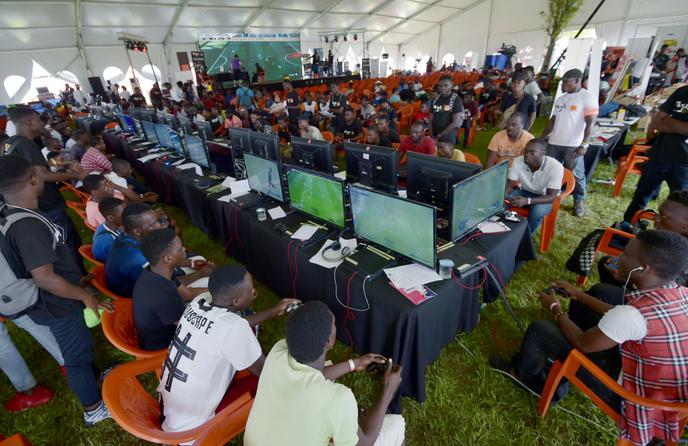
Participants in the PES tournament, a football game, during the second Festival of Electronics and Video Games of Abidjan at The Palace of Culture in Abidjan, Ivory Coast, on November 24, 2018.
Africa’s gaming sector is on course for a huge expansion, which could provide millions of new jobs across the continent, according to participants at the second FEJA gaming event that's just been held in Abidjan, Ivory Coast.

At $140 billion, the global video games industry is already a cool $100 billion larger than the film industry, and African games companies are hoping to become major players.

According to Serge Thiam, digital strategy director at Stay Connect, in 2014, Africa had 23 million video games players, and that reached 500 million in 2018, largely due to the rapid penetration of smartphones.

The games market itself has grown from $105 million to $570million in the same four-year period. Combine that with hardware sales and gaming is already a billion-dollar business in Africa.

African games developers face a range of issues. Internet connections are slow, unreliable and, at up to $150 a month for broadband, prohibitively expensive.

Hardware lags behind what is available in other regions and programming talent is scarce. Further issues hamper game development and monetisation on the continent, such as a lack of both an integrated payments system for enabling in-game purchases and advertising exchanges that could serve in-game ads that allow developers to offer games for free. But the sector is growing at over eight percent annually, and overall economic development is easing some of the industry’s ills.

In terms of kick-starting the industry on the continent, a lack of awareness around its potential has also been a major setback.

“We didn’t ever have a [school] class where someone said ‘make a video game’,” said Wilfried Ouonouan, game designer at Abidjan-based Work’d gaming studio. “We’ve learned game developing thanks to YouTube and the Internet. We started a company thanks to YouTube,” but, he said, the company is struggling to grow as it cannot find enough skilled staff.

Largest Video Game Event in Africa

FEJA, which took place in Abidjan from 23-25 November, is the largest, most representative video game event in Africa, in terms of the number of countries represented and the almost 40 pro gamers flying in from across the continent.

The eSports tournaments are crowd-pullers with 13 million francs CFA in prize money ($22,500) for tournaments for FIFA, Street Fighter, Fortnite and Candy Crush, but despite the prize fund, the second FEJA has a purely business aim: job creation for the video games industry.

As games become bigger and more complex, they require expanding teams of project managers, marketers, sound designers and testers. “We can easily see one million people hired in the games industry in West Africa by 2025 – or more. Throughout Africa as a whole that could reach five million,” Sidick Bakayoko, founder and CEO of Paradise Game, told FRANCE 24.

FEJA’s organisers, Abidjan-based Paradise Game, see the three-day event as both an international showcase for Africa’s gaming industry, and an opportunity to raise awareness at home of the potential of the games sector.

“If we want game developers to start joining us, we need to make sure that they see there are examples of African companies that develop games,” said Bakayoko. “We really want to help push [the developers] so they can grow, and that will impact the entire market.”

Paradise Game has already managed to reach large audiences in Ivory Coast ahead of the event with Paradise Game Show, a weekly gaming TV show. Although the showhas been commissioned by the government-owned RTI station, there is still no central funding to develop the gaming industry. “It’s a chicken and egg kind of situation,” said Bakayoko, “They want to see first that [the sector] is working… For now we have to do a lot of things on our own.”

Building new skills

The easier sell at the moment is the eSports element. The global eSports market is estimated to reach $906 million in 2018 and $1.65 billion by 2021. They are a key part of the video games industry and are on the way to being recognised by traditional sporting bodies -- but Paradise Game’s founder is cautious.

“If you’re driving just the eSport component, that means you’re leaving on the side all these guys who could develop games, which tomorrow could become the eSport games that people locally play – instead of EA Sports and all those games,” said Bakayoko whose Paradise Game is also promoting e-learning in gaming centres to provide the technicalskills the sector will need.

“We need to create our own games and to do that we need to have our own developers and studios. And how do you get studios? You need schools,” Bakayoko said.

eSports players themselves are aware of the development issuesthat the games industry in Africa faces. Awareness of the sector's potential is still critically low.“Generally parents don’t want their kids playing computer games as they’ve no understanding that they can go on to earn so much,” Boka Yao Gilchrist told FRANCE 24. The winner of the Street Fighter tournament at the first FEJA in 2017, the 25-year-old has been earning money from gaming for the past eight years and has seen prize totals rising rapidly. “In the first seven years I made around 300,000 CFA [$500] in total, then in the last year and a bit I’ve made 3 million CFA.”

“The industry here isn’t developed enough for me to become a [full-time] pro gamer,” said Gilchrist, “It’s not like in Europe where if you train and if you’re good then you can get somewhere. Here there aren’t any sponsors, or clubs so it’s still just a dream for us.”

Game designer and FEJA participant Wilfried Ouonouan, game designer at Work'd, summed up the long-term task: “Parents need to know that [working in games] is a possibility, that these are the companies that can hire you. Work’d and the other African gaming companies – we have a big responsibility here. We have no right to fail. We have to be the companies where these guys will work.”

By Frank HERSEY - Source of article France24

lundi 26 novembre 2018

DISCOP Joburg 2018 wrap-up


Wrapping up their seventh Johannesburg edition of the DISCOP content, adaptation rights and project markets, organisers announced a steady growth in year-on-year attendance – 1188 delegates representing 783 companies from 69 countries in 2018 versus 1155 delegates representing 772 companies from 63 countries in 2017.

Despite economic turbulences hurting Sub-Saharan Africa’s entertainment and media marketplace, 487 independent film, television, digital and animated content producers from 35 Sub-Saharan African countries attended the 3-day market – twice as many as last year – proving the importance of homegrown content for the 156 African broadcasters, premium cable channels and other content delivery platforms who came to Johannesburg for the continent’s leading content production and distribution industries gathering.

“For DISCOP to remain relevant in these fast-moving ecospheres, we must constantly pursue innovative services that provide more value to our delegates. For us there could be no greater value than empowering young and creative producers from Africa and providing them with a business platform that meets their true needs,” said Patrick Zuchowicki, CEO of DISCOP Markets.

Many challenges have faced the industry, with more platforms, pay TV operators, and broadcasters than ever competing for the same revenue sources, there have been a number of casualties throughout the year. However, there is still overall confidence in the upwards growth trajectory of the sector across Africa. The increased competition amongst broadcasters, SVOD, OTT and mobile platforms has been a boon for African producers who have seen more demand, and hence higher prices being paid for content made in Africa.

This year’s DISCOP Johannesburg also saw a number of major announcements taking place, with a focus on co-productions and international deals.

Global Content Hub by Zee announced a co-production deal with Nigerian agency MACE and Multimedia Group, a broadcaster from Ghana whose channels Joy Prime and Adom TV will air the new drama series Deceptive Measures. The series is currently in production and is a remake of popular Indian series Pavitra Rishta, one of the most successful ever Indian drama series with both Indian and international audiences. The filming takes place across Kenya, Ghana and Nigeria and the first season will have 52 one-hour episodes. Popular actors from Kenya, Ghana and Nigeria will star in the series such as Michael Godson, Joy Jasmin Aygeman (Adomaa) and other actors from the 3 countries.

America’s GRB studios and South Africa’s Black TV announced a deal that will see will GRB studios distributing more than 200 hours of programming per week to Black TV. The deal was announced in a press statement by Mr. Benz at the start of DISCOP Johannesburg 2018. The partnership is key to Black TV’s launch and will immediately provide the service with hundreds of hours of programming. Future plans include co-producing original content for the platform.

Additionally, THE CANAL+ Group announced the launch of THEMA DISTRIBUTION, a new business activity of CANAL+ INTERNATIONAL, in charge of the distribution and sale of audiovisual content in Africa and internationally. THEMA DISTRIBUTION will focus on the development of African content on all media, and in particular content produced or acquired by Group channels. Indeed, CANAL+ channels and A+ in Africa are playing a key role in the African production and co‑production of a number of programs — including movies, African TV series and short comedy TV series — that THEMA DISTRIBUTION will now spread throughout the continent and beyond.

Further exciting news for the region was the intense interest in the African adaption of Ugly Bettyafter the announcement that KNOWN ENTERTAINMENT ASSOCIATES has bought the rights from RCN, Columbia’s Public Broadcaster. Ugly Betty is considered as the one of the world’s leading television properties.

Patrick Zuchowicki explains further his view on solutions for the challenges facing the industry, “Accelerated growth is what we work towards at all DISCOP events – for local and regional film, television, digital and animation content in particular, and for the whole African Entertainment & Media Marketplace as a whole.”

By discop Press - Source of article Screenafrica

Smartcall invests R10 mln into SA gaming and esports industry

This investment is one of the biggest into SA gaming and esports to date.

Prepaid cellular services and products provider, Smartcall, has announced a R10 million investment into Mettlestate in a bid to drive growth within the South African gaming and esports industry.

This investment, one of the biggest into SA gaming and esports to date, will be used to create and host various leagues consistently over the next few years.

Barry Louzada, co-founder of Mettlestate, affirms that hosting more leagues is essential to driving sustainable and long-term growth for SA gaming and esports, and this investment by Smartcall will go a long way in this regard.

“More leagues mean more opportunities for players at all skill levels and across various gaming titles to compete, with more rewards for the amount of time and passion they put into their craft. Since launching in March 2017, Mettlestate has hosted various leagues, tournaments and qualifiers for various gaming titles, where close to R2 million in prize money has been won by players across SA.”

“Any investment big or small by a brand into the industry adds value. This investment by Smartcall will allow us to do even more amazing things and drive even more opportunities for gamers in South Africa. It’s very exciting. We’re really grateful that Smartcall, a credible brand with over 20 years of business under their belt, saw a trusted partner in Mettlestate.”

Jan Cronje, Marketing Manager of Smartcall, notes that Smartcall is always looking to adapt and expand its user base to new and exciting areas, and esports is currently doing just that on a global level.

“With gaming having mobile ties in both the casual and esports space, it would be a wasted opportunity to not get involved in this industry and introduce it to a whole new group of people across South Africa. We’ve been watching and talking to Mettlestate for quite some time now, and their passion, drive and flawless execution of events and leagues that they host makes us feel comfortable that we’ve put our investment in the right place. Together, we can forge the future of South African esports,” says Cronje.

The gaming and esports industry in South Africa has grown exponentially in the last few years, and continues to do so. Today, there are more teams than ever in the South African gaming space, with an increasing number of brands showing an interest in being a part of it. More brands are starting to realise that it is more difficult to reach the audience they want to reach by using “old” or “the usual” methods of marketing.

Companies are moving away from the conventional places that brands advertise, like TV, radio and billboards, and are realising that people are consuming content in so many new ways – on their mobile devices or streaming on their smart TVs and more – which makes it harder to target them using conventional methods.

“A lot more brands are also starting to realise just how switched-on and loyal gamers are, which not only helps drive sales, but also driving conversation and engagement with brands online (via social media and beyond). The gaming space is as complex as it is exciting, which opens up so many opportunities for brands across the board,” Louzada adds.

Cronje echoes Louzada’s sentiment. “The loyalty, passion and dedication of Mettlestate and gamers across South Africa is what made this an easy investment for us. There are so many missed opportunities in the gaming and esports space, and it is time to start changing that for the better. This R10 million investment is not so much an investment as it is a long-term promise to gamers across South Africa that Smartcall is here to stay, and is prepared to help forge the future of South African esports together with Mettlestate,” affirms Cronje.

Source of article Itnews Africa

Follow Neo Sesinye on Twitter
Follow IT News Africa on Twitter

« Le jeu vidéo représente un avenir pour les jeunes en Afrique »

Pendant le tournoi de « PES » (un jeu de football) organisé par le Festival de l’électronique et du jeu vidéo d’Abidjan, en Côte d’Ivoire, le 24 novembre 2018.
Pendant le tournoi de « PES » (un jeu de football) organisé par le Festival de l’électronique et du jeu vidéo d’Abidjan, en Côte d’Ivoire, le 24 novembre 2018. SIA KAMBOU / AFP

Le Festival de l’électronique et du jeu vidéo d’Abidjan cherche à présenter aux passionnés du continent le fonctionnement et les métiers du secteur.

« Je suis venu pour gagner ! », lance Cheick Kamagate, qui espère bien remporter le tournoi de PES, un jeu de foot, lors du deuxième Festival de l’électronique et du jeu vidéo d’Abidjan (FEJA), une manifestation pour promouvoir l’industrie du jeu vidéo en Afrique.

Ce bachelier ivoirien de 19 ans, qui s’adonne à sa passion « trois à quatre heures par jour », aimerait s’acheter du matériel de jeu avec la prime allouée au vainqueur du tournoi. « Si je peux, je travaillerai dans le jeu vidéo comme développeur, mais plutôt aux Etats-Unis », déclare ce futur étudiant en informatique.

L’Afrique ne représente actuellement que 1 % du marché mondial du jeu vidéo, selon des études menées par de grands cabinets de conseil internationaux et l’opérateur de télécoms Orange. Les pays pesant le plus sont l’Egypte, le Nigeria et l’Afrique du Sud. Mais elle constitue un débouché prometteur, grâce à sa vitalité démographique, à sa jeunesse et à sa soif de nouvelles technologies : un demi-milliard de moins de 25 ans, autant de personnes connectées à Internet, et un milliard d’abonnés à la téléphonie mobile, dont la moitié joue sur smartphone, relève Serge Thiam, consultant spécialisé.

Des « gamers » d’une dizaine de pays

« Le jeu vidéo représente un avenir pour les jeunes en Afrique, c’est une source de nouveaux emplois, un moyen de gagner sa vie », affirme Sidick Bakayoko, créateur de la société ivoirienne Paradise Game et fondateur du FEJA.

Le festival, organisé sur trois jours, de vendredi 23 à dimanche 25 novembre, se veut plus qu’un tournoi ; il ambitionne d’expliquer aux jeunes comment fonctionne l’industrie du jeu vidéo, quels métiers ce secteur propose et comment s’y former. Afin d’attirer le public, des « gamers » (joueurs professionnels) d’une dizaine de pays du continent ont été invités, pour participer aux côtés des visiteurs ivoiriens aux différents tournois de jeux d’aventure ou de e-sport.

Si l’envie et l’enthousiasme sont réels, les moyens financiers font défaut en Afrique, reconnaît Sidick Bakayoko. Les jeunes manquent d’argent pour acheter des jeux et « le modèle économique reste à trouver ». Aucune donnée n’est disponible sur le nombre total d’emplois que représente actuellement le secteur sur le continent.

Environ trois cents studios de développement de jeux y existent, mais il s’agit de micro-entreprises, qui emploient moins de cinq personnes, précise Sidick Bakayoko. Avec quelques success stories, comme celle du studio camerounais Kiro’o dont le jeu d’aventure Aurion (dans lequel un roi déchu tente de reconquérir son trône) a percé au niveau international.

Richesse culturelle

Plusieurs studios commencent aussi à émerger à Madagascar et en Centrafrique, selon M. Bakayoko, pour qui l’Afrique doit miser sur sa richesse culturelle afin de se différencier. Le point commun entre Aurion, Dahalo, développé par le studio malgache Lomay, ou The Boy in Savannah, du créateur togolais Pio Jules Tchedou : ils mettent en avant les cultures de leurs pays, dans un monde dominé par les jeux occidentaux ou asiatiques.

Un engagement largement salué par les joueurs présents au FEJA. « J’aimerais bien créer un jeu d’aventure inspiré de Soundiata Keïta », souverain mandingue et fondateur de l’empire du Mali au XIIIe siècle, explique Elie Kouadio Kouamé, un étudiant en infographie de 24 ans et « gamer » adepte de PES.

Belko Diallo, un Burkinabé de 22 ans venu disputer le tournoi de Street Fighter (jeu de combat), voit plus loin. Cet étudiant en médecine rêve « de combiner [sa discipline] et le jeu vidéo, en utilisant certaines technologies des jeux pour des examens médicaux ».

Source de l'article Le Monde Afrique

Video games represent a future for young people in Africa

During the tournament "PES" (a game of football) organized by the Festival of electronics and video game of Abidjan, Ivory Coast, November 24, 2018.
During the tournament "PES" (a game of football) organized by the Festival of electronics and video game of Abidjan, Ivory Coast, November 24, 2018. SIA KAMBOU / AFP


" I came to win ! ", launches Cheick Kamagate, who hopes to win the tournament PES a football game, during the second Festival of Electronics and Video Game of Abidjan (FEJA), an event to promote the video game industry in Africa.

This Ivorian bachelor aged 19, who devotes himself to his passion "Three to four hours a day", would like to buy gaming equipment with the bonus awarded to the winner of the tournament. "If I can, I will work in the video game as a developer, but rather in the United States", says this future computer science student.Read also After video and music, the future of the video game promised streaming

Africa currently accounts for only 1% of the global video game market, according to studies by leading global consulting firms and telecom operator Orange. The countries that weigh the most are Egypt, Nigeria and South Africa. But it is a promising outlet, thanks to its demographic vitality, its youth and its thirst for new technologies: half a billion less than 25 years, as many people connected to the Internet, and a billion telephone subscribers mobile, half of which plays on a smartphone, reports Serge Thiam, a specialist consultant.

Gamers from a dozen countries

"The video game represents a future for young people in Africa, it's a source of new jobs, a way to make a living"says Sidick Bakayoko, creator of the Ivorian company Paradise Game and founder of the FEJA.

The festival, organized over three days, from Friday 23 to Sunday 25 November, is more than a tournament; It aims to explain to young people how the video game industry works, what jobs this sector offers and how to train. In order to attract the public, "gamers" (professional players) from ten countries of the continent have been invited, to participate alongside Ivorian visitors to the different tournaments of adventure games or e-sports.Read also Will e-sport become an Olympic discipline?

If envy and enthusiasm are real, financial means are lacking in Africa, recognizes Sidick Bakayoko. Young people lack money to buy games and "The economic model remains to be found". No data are available on the total number of jobs currently represented by the sector on the continent.

About 300 gaming studios exist, but they are micro-enterprises that employ fewer than five people, says Bakayoko. With some success stories, like that of the Cameroonian studio Kiro'o whose adventure game Aurion (in which a fallen king is trying to regain his throne) has broken through at the international level.


Cultural wealth

Several studios are also beginning to emerge in Madagascar and the Central African Republic, according to Mr Bakayoko, for whom Africa must capitalize on its cultural wealth in order to differentiate itself. The common point between Aurion, dahalo, developed by the Malagasy studio Lomay, or The Boy in Savannah, from the Togolese creator Pio Jules Tchedou: they highlight the cultures of their countries, in a world dominated by Western or Asian games.Read also "The video game industry continues to learn how to play games and treat its employees"

A commitment widely welcomed by players present at FEJA. «I would like to create an adventure game inspired by Soundiata Keïta», Mandingo sovereign and founder of the empire of Mali in XIIIecentury, explains Elie Kouadio Kouamé, a 24-year-old computer graphics student and "gamer" adept at SEP.

Belko Diallo, a 22-year-old Burkinabe who came to play in the tournament Street Fighter (fighting game), see further. This dream medical student "To combine [sa discipline] and video games, using certain game technologies for medical examinations ".

Source of article News Africa

Les jeux vidéos africains à la conquête du monde

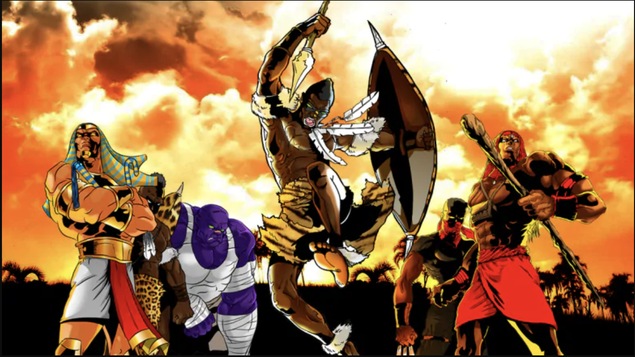
Le jeu «African Legends», qui met en vedette des superhéros inspirés du folklore africain qui combattent le crime et la corruption à travers le continent. Photo : Leti Arts

Les amateurs de jeux vidéo sont nombreux en Afrique, et de plus en plus de studios s'affairent à produire des jeux qui reflètent les cultures et les réalités du continent. À l'occasion du FEJA, le premier festival majeur du jeu vidéo africain, qui se tient à Abidjan cette semaine, les passionnés de jeux vidéo Jeanbart et Karim Ouellet en présentent quelques-uns parmi les plus remarquables développés en Afrique.

Malgré un foisonnement récent, le marché du jeu vidéo africain est encore, somme toute, petit : il génère environ 1 milliards de revenus, soit un maigre 1 % des revenus totaux générés par cette industrie. Le potentiel de croissance sur le continent est toutefois énorme, avec une population d'un demi-milliard de personnes âgées de moins de 25 ans et de 1 milliard d’abonnés mobiles. 

Le local avant l'international

Les consoles et PC étant encore plutôt inaccessibles, la majorité de la population joue sur mobile, c’est donc le marché vers lequel l’industrie locale s’est tournée naturellement. Jeanbart constate qu'une des particularités des jeux mobiles qui se développent en Afrique, c’est qu’on y trouve beaucoup de jeux à vocation éducative, ancrés dans la réalité du quotidien.

Beaucoup croient que le succès des jeux africains viendra par la culture. Une des choses qui rend les jeux africains intéressants, c’est que, contrairement aux jeux occidentaux simplement situés en Afrique qui ont tendance à exploiter des contextes de guerre, les jeux africains s’inspirent du folklore africain, des contes, des légendes. Jeanbart

Les recommandations de Jeanbart et Karim Ouellet

1. Africa's Legends - Jeu mobile produit par Leti Arts (Nairobi, Kenya)

Il s'agit d'un jeu d'assemblage, comme Bejeweled ou Candy Crush, mélangé à un jeu de combat tour à tour. On doit choisir son combattant africain; chacun a ses spécialités. Le jeu est basé sur une bande dessinée du même titre. Les joyaux qu’on aligne déterminent si l'on attaque, si l'on fait un coup spécial ou si l'on se défend.

2. Aurion : Legacy of the Kori-Odan  - Jeu pour PC produit par Kiro’o Games (Cameroun)

L'histoire : produit par le premier studio de jeux vidéo d'Afrique centrale, Aurion est un jeu de rôles qui a pris 13 ans à être réalisé. La petite histoire du jeu est révélatrice des défis auxquels les concepteurs africains font face. Inspiré par les jeux de rôles et les dessins animés japonais, l'idéateur d'Aurion rêvait de faire le jeu de rôles parfait. Il a découvert RPG Maker, un programme de développement qui lui a permis de se rapprocher de son rêve. Avec deux amis, il crée donc entre 2003 et 2005 la première version du jeu.

Après plusieurs années difficiles à apprendre par eux-mêmes, ils tentent en vain de financer le produit via Kickstarter. Avec très peu de financement, ils parviennent à fonder le premier studio de jeux vidéo du Cameroun. Après plusieurs embûches et avec une équipe de 20 personnes dévouées, ils parviennent à mettre au monde Aurion en 2016.

Le jeu : dans Aurion, on contrôle Enzo, un prince qui, juste avant d’être couronné, est victime d’un coup d’État orchestré par son beau-frère. Il voyage dans le royaume avec sa future reine pour découvrir d’autres cultures et former des alliances pour reprendre le trône. Inspiré par plusieurs mythes africains, le personnage peut utiliser les pouvoirs de ses ancêtres pour l’aider dans sa quête.

L'avis de Jeanbart : c'est vraiment un excellent jeu, si l'on considère l'absence totale d'expérience en conception de jeux de toute l'équipe et du peu de ressources dont elle disposait. La musique est excellente, et les dessins faits à la main aussi. Le système de combat aurait pu être mieux exécuté, mais c'est néanmoins d'un jeu à découvrir, surtout que c'est le premier jeu de rôles africain venant du premier studio d'Afrique centrale.
3. Dahalo  - Jeu pour PC produit par Studio Lomay (Madagascar)

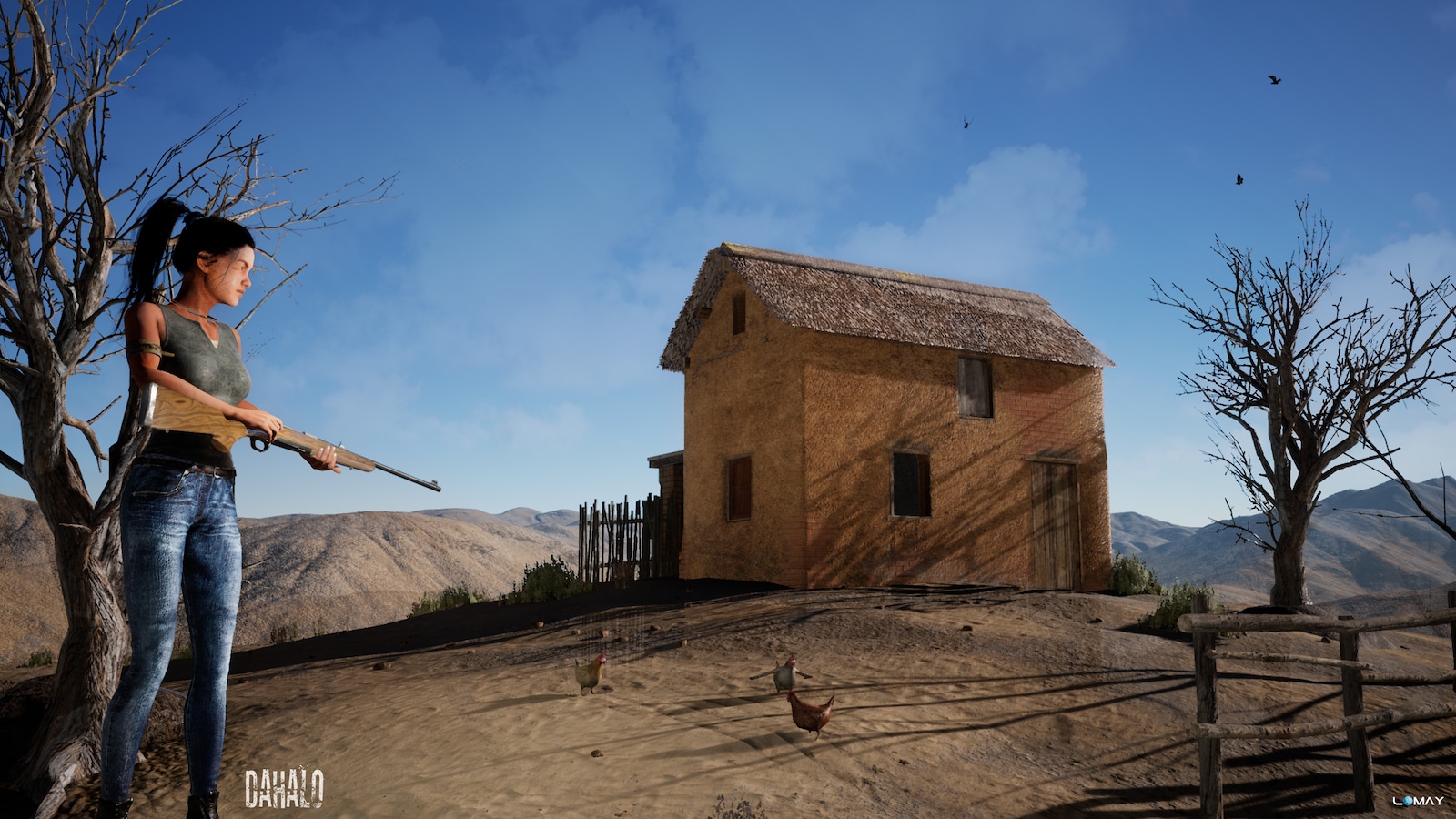
Synopsis : Dahalo est un jeu d’aventure à la troisième personne qui dénonce le conflit qui existe actuellement à Madagascar. Il parle de l'histoire d’une fille qui s’est aventurée à la campagne et qui s’est retrouvée au beau milieu des conflits avec les Dahalo, ce qui la place dans une situation délicate. Elle essaie de s’en sortir. C'est le premier chapitre du jeu.

La date de sortie du jeu n'a pas encore été annoncée (au grand dam de Karim Ouellet, qui l'attend avec impatience).

Une image tirée du jeu vidéo Dahalo, développé par le studio malgache Lomay. Photo : Studio Lomay
En extra : une liste de jeux vidéo développés en Afrique
  • Toxic Bunny
  • Chase: Hollywood Stunt Driver
  • Football Genius: The Ultimate Quiz
  • Nairobi X
  • Cross Dakar City
  • The Boy In Savannah
  • The Boy In Savannah Advanced Edition
  • Les héros du Sahel
  • Les aventures de Béhanzin
  • Kissoro Tribal Game
  • Mosquitos Smashers
Par Rebecca Makonne - Source de l'article Radio Canada